ADA Accessible Portable Bathroom Standards for Rental Decision-Makers
When people rent portable toilets, they generally begin with headcount, distribution timing, and budget plan. Availability in some cases gets dealt with like a box to check at the end. That is where problem starts.
An ada easily accessible portable restroom is not a specialty add-on for a narrow group of users. It becomes part of basic accessibility. If someone comes to an event, public celebration, or various other short-lived website and can not independently make use of the bathroom due to the fact that the unit selection or positioning was negligent, the failure is immediate and individual. It influences self-respect, safety, and whether that individual can stay at all.
For rental decision-makers, the concern is not simply whether to include one ada mobile restroom The real question is whether the systems you rent, and the means you put them, associate the government accessibility standard that regulates this area in the United States. The regulating standard is the 2010 ADA Criteria for Accessible Style, as analyzed by the Access Board and the Department of Justice. That matters because many blunders occur in the gap between buying an accessible device and really providing access.
I have seen this play out in acquainted methods. A planner orders an ada certified mobile toilet and thinks the task is done. Then the unit gets here and gets positioned on soft ground, behind various other toilets, or at the end of a slope that makes the method challenging or difficult. Theoretically, an accessible system was included. In technique, gain access to was never provided.
The requirement that drives the decision
For general portable bathroom rentals, ease of access is not optional. The ADA criteria attend to portable commode clusters, and the Gain access to Board has made clear that the regulation applies even at short-lived occasions. If you have a cluster of single-user mobile bathroom systems, a minimum of 5 percent of the systems because cluster need to be accessible.
That percentage seems easy until you are making real rental decisions. If a site has numerous bathroom collections spread throughout a building, the evaluation is about each collection, not just the overall matter throughout the whole event. Decision-makers in some cases assume one accessible unit someplace on website covers whatever. That can be a costly misunderstanding if the accessible unit is isolated much where individuals actually are, or if another cluster has none.
This is why the expression ada portable toilet requirements must not be decreased to a product specification alone. The need is partly about the number of systems, yet it is likewise regarding location, path, entrance, and useful interior room. Access lives in the complete setup.
There is one crucial limit to keep straight. The criteria identify mobile toilet devices at building and construction websites that are utilized specifically by construction employees. Those units are discriminated under the older 1991 scoping language referenced in government products. For general ada portable bathroom rental decisions outside that narrow context, the accessible-unit requirement stays the operative issue. If your usage instance is public-facing, event-based, customer-facing, or otherwise not restricted exclusively to building employees, you must not assume any kind of exemption.
What "easily accessible" indicates in practice
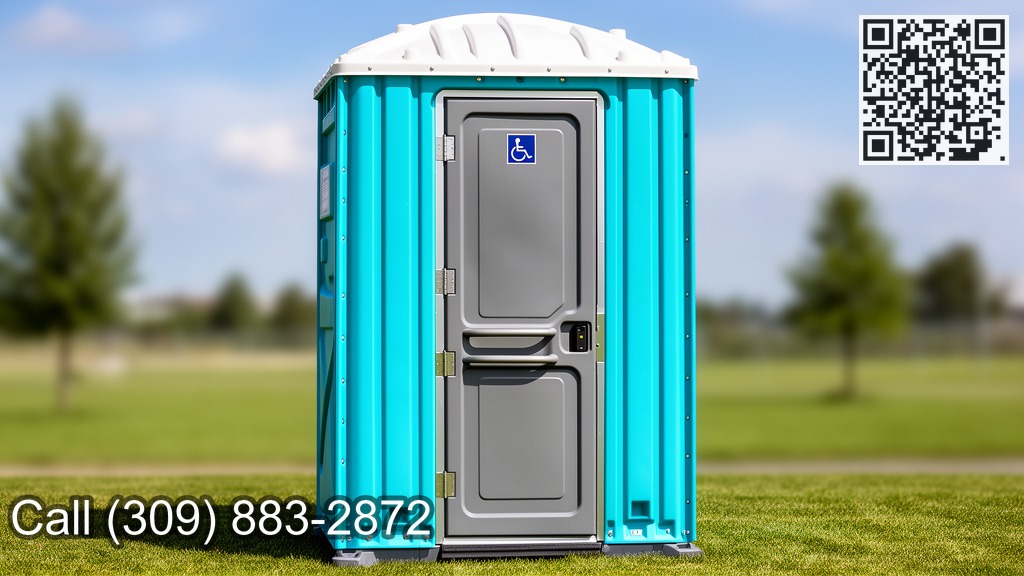
A portable system does not end up being certified since the vendor labels it as available. A true ada certified easily accessible mobile restroom has to please numerous layers of accessibility expectations.
First, it must be recognizable. Accessible portable commode units have to show the International Sign of Ease Of Access. That is standard, yet it is more crucial than it seems. If the obtainable unit is not clearly significant, users might waste time searching, request help they ought to not need to ask for, or assume no accessible option exists.
Second, the system has to be on an available path and have an accessible entryway. This is where lots of rental configurations fall short. Even the very best ada-compliant mobile restrooms can end up being pointless if they are put where the route is blocked, unsteady, or separated from the remainder of the site. If ramps or touchdowns are required, those elements should meet the applicable ADA technological needs as well. A makeshift repair at distribution is not instantly an obtainable fix.
Third, the commode device itself have to satisfy the technical toilet-room requirements that use. Federal support indicate fixture clearances, turning space, door maneuvering clearances, and the applicable grab-bar and water-closet clearance regulations. For a decision-maker, that suggests you are not just renting a bigger box. You are renting out a space that must work dimensionally genuine customers with real mobility needs.
That difference matters since some people shop by exterior appearance. They ask for the "big one" or the "wheelchair device" without confirming whether the version supplied is in fact meant to work as an ada compliant mobile toilet Size alone is not the standard.
The count is just the beginning
The 5 percent policy often obtains duplicated without enough context. It works, however it can create false self-confidence. If you have twenty single-user mobile bathrooms in one collection, at least one must come. That seems manageable, and often it is. But if that one accessible device is locked, boxed in by crowd-control fencing, or put where the route is damaged, the number does not conserve you.
I motivate rental decision-makers https://andresomgd957.lowescouponn.com/ada-certified-easily-accessible-portable-bathrooms-what-rental-consumers-should-know to believe in layers. Begin with amount, then relocate swiftly to use. Ask on your own whether a person who makes use of a movement tool can fairly discover the system, reach it, open it, maneuver inside it, and utilize it with privacy and independence. The legislation utilizes technical language, yet the practical test is human.
There is additionally a site-planning issue that appears at momentary occasions. Portable toilet collections often obtain pressed to the edges of a location because they are not rather, they require solution accessibility, or planners wish to maintain them away from food locations. That reaction can threaten access. A remote placement might produce a long or unequal course. It might likewise divide the accessible unit from the major individual flow. In some cases the most inexpensive placement produces one of the most pricey problem.
Placement choices are where numerous compliant leasings become noncompliant setups
In actual procedures, positioning is where the gap opens between documents and real accessibility. A vendor may give an ada handicap obtainable portable restroom that is built for accessibility, but the website crew or event group can still make it unusable in the last hour.
One typical blunder is dealing with the obtainable system as an afterthought during load-in. Requirement devices get lined up initially. After that the bigger obtainable device gets tucked onto completion wherever space is left. If that remaining room develops a poor strategy or uncomfortable door maneuvering problems, the leasing has currently drifted off course.
Another mistake is forgeting the path from vehicle parking, drop-off, or core task locations. The conventional needs an obtainable route and entry. Decision-makers occasionally concentrate on what happens at the commode door and fail to remember the method. A system reached just by rough ground or an improvised course can fall short the very people it was implied to serve.
I have actually also seen accessible systems utilized as storage buffers because they are roomier inside. Personnel stash products there throughout arrangement and pledge to clear them out later. Occasionally they do. Often they neglect. The larger interior that is expected to support turning area ends up being a comfort wardrobe. That is not a triviality. It beats the function of the available unit.
Questions worth asking prior to you authorize the rental agreement
A short conversation prior to shipment can prevent a lengthy day of rushing on site. The most effective vendors are usually straight concerning what their devices are designed to do, but the burden of great decision-making still rests with the renter.
Here are the inquiries that matter most:
- How numerous single-user devices will certainly remain in each cluster, and the number of accessible systems are consisted of for every cluster?
- Is the unit clearly related to the International Icon of Accessibility?
- What site problems are required to offer an available course and easily accessible entrance?
- If ramps or touchdowns are needed, that is responsible for offering ADA-compliant ones?
- Has the last positioning strategy been examined with ease of access in mind, not simply delivery convenience?
That list looks straightforward, but it forces the best conversation. Notice that only one concern is about the unit itself. The others handle scoping, path, and responsibility. Those are the locations where leasings frequently go wrong.
Temporary does not imply exempt
This factor is entitled to focus due to the fact that it is typically misconstrued. The Access Board has clearly specified that the 5 percent accessible-unit guideline relates to portable bathroom collections also at short-lived events. The reality that a gathering lasts one day, one weekend, or one week does not get rid of availability obligations.
That matters throughout a wide variety of settings, though the legal details of a specific event can vary and need to be evaluated with counsel when stakes are high. The functional lesson is simple. If your occasion is temporary, do not presume you have a lot more flexibility than the basic allows. Short-lived problems still need to be available conditions.
There is a state of mind behind this complication. Some organizers see portable toilets as naturally temporary devices, and since they are short-lived, they think compliance can be looser. Federal availability policies do not function this way here. A momentary commode that the public have to utilize is still a toilet that should come under the controling requirement when the scoping triggers apply.
Why clusters matter so much
The word "cluster" is easy to skim past, yet it has actual consequences. Mobile washrooms are often dispersed throughout a residential or commercial property in a number of groupings. One collection may rest near the entrance, an additional by an efficiency location, and another near vehicle parking. If you only count the total variety of commodes on website and afterwards provide one easily accessible system someplace, you can end up with a plan that leaves part of the site effectively inaccessible.
That is why seasoned planners map commode areas early, not late. They do not simply ask, "Do we have an obtainable unit?" They ask, "Where is each cluster, and does each collection satisfy the access need?" This is especially vital when website plans advance. A late adjustment to relocate a collection or split it in 2 can silently produce a conformity concern if the accessible matter and placement are not adjusted.
For large sites, this comes to be a coordination issue between logistics, procedures, and whoever is in charge of ADA conformity. If those functions are divided throughout teams, a person needs authority to say, "Stop, we changed the cluster setup, so we need to revisit the easily accessible toilet plan." Without that checkpoint, the final arrangement can drift away from the original certified design.
Product tags can mislead, so demand specifics
The market utilizes numerous overlapping expressions: ada certified mobile restrooms, ada-compliant portable toilet, ada certified mobile toilets, and ada obtainable mobile restroom Those tags are useful for search and purchase, however they can create an incorrect feeling of precision. Not every conversation uses the exact same terminology carefully.
A supplier may explain a device as wheelchair accessible in a basic feeling. One more could market an extra-large mobile restroom and think customers will treat it as accessible. Those summaries are not nearly enough by themselves. What issues is whether the unit and its setup please the availability requirements that actually apply.
That is why I like plain, functional follow-up concerns over marketing language. Ask whether the device is planned to meet ADA ease of access assumptions for portable commode usage. Ask just how it is recognized. Ask what positioning problems should exist for certified usage. Ask who is accountable for course conditions and any type of required ramps or landings. Those inquiries punctured branding fast.
The human side of a technological standard
The technological policies are there since people need area to move, turn, technique, and use components securely. It is easy to forget that when the discussion gets buried in procurement terms.
For a person that makes use of a wheelchair or other wheelchair gadget, the distinction in between a workable device and a severely positioned one is not subtle. A door that can not be approached appropriately, a route that damages down in the last few feet, or an inside that does not enable appropriate maneuvering can finish the interaction prior to it starts. The individual may need to look for aid, leave the event, or endure pain and embarrassment.
That is why I have a tendency to push back when access gets framed as "special lodging." Restroom gain access to is fundamental participation. If individuals can not utilize the facilities given, they are not completely consisted of in the event or setting. An audio ada portable commode rental strategy sustains participation, length of keep, and the straightforward capacity to be present without extra negotiation.
Compliance belongs to a more comprehensive enforcement climate
Accessibility assumptions are not fading into the history. If anything, they are being enhanced in a broader compliance environment. Federal ADA task has continued across sectors, consisting of recent advice on electronic access deadlines for state and local government entities. That support is about web and mobile accessibility, not mobile commodes, yet it reflects something essential for rental decision-makers: ADA conformity continues to be energetic, visible, and enforceable.
That wider climate issues because organizations occasionally treat physical accessibility decisions as low-risk if they are temporary or functional. That is not a secure presumption. Also besides legal direct exposure, ease of access failings take a trip quickly through attendee feedback, public issues, and online reputation. A restroom problem is remarkable for all the wrong reasons.
A useful testimonial before distribution day
The cleanest ADA preparation takes place before the vehicle ever before rolls. When units are onsite, every improvement sets you back more time, more cash, or both. Prior to shipment, it assists to walk through an easy review with your operations team and vendor.
Use this five-point check:
- Confirm the variety of devices in each cluster and confirm that a minimum of 5 percent are accessible.
- Confirm which details system or systems are the easily accessible ones and that they will certainly show the ease of access symbol.
- Review the precise positioning area, consisting of the path users will certainly take to reach the unit.
- Resolve ahead of time whether ramps or landings are needed and that is offering them.
- Protect the easily accessible unit from being obstructed, repurposed, or moved throughout setup.
That last point should have a lot more regard than it normally obtains. Also when an easily accessible system gets here in the best quantity and the right design, it can still be jeopardized by casual operational decisions after distribution. One of the most common access failures are not always significant. Commonly they are ordinary oversights that no one owned.
Good decisions start with a bigger interpretation of "rental"
A lot of purchase teams think they are renting out a commode. In truth, they are renting out access to sanitation for a blended public. That is a larger duty. It consists of the system, the count, the path, the entry, the recognition, and the last condition in the field.
If you come close to the work in this way, the expression ada certified easily accessible portable restrooms stops sounding like a product group and starts sounding like an operational outcome. That shift works. It relocates interest from brochure language to real-world use.
For most decision-makers, the very best path is not complicated. Recognize that the 2010 ADA Specifications control. Remember that a minimum of 5 percent of single-user mobile toilet devices in each cluster need to come, even at short-lived events. See to it available devices are understood the International Sign of Access. Treat path, entry, ramps, and touchdowns as component of the need, not extras. And never ever presume that a larger device, a vendor tag, or a short-term configuration immediately pleases the standard.
That is exactly how thoughtful rental decisions obtain made. Not by examining a box, however by ensuring the washroom can actually be used by the people it is meant to serve.
 Ask ChatGPT
 Ask Grok
 Ask Perplexity
 Ask Claude
 Ask Google AI
 Ask You